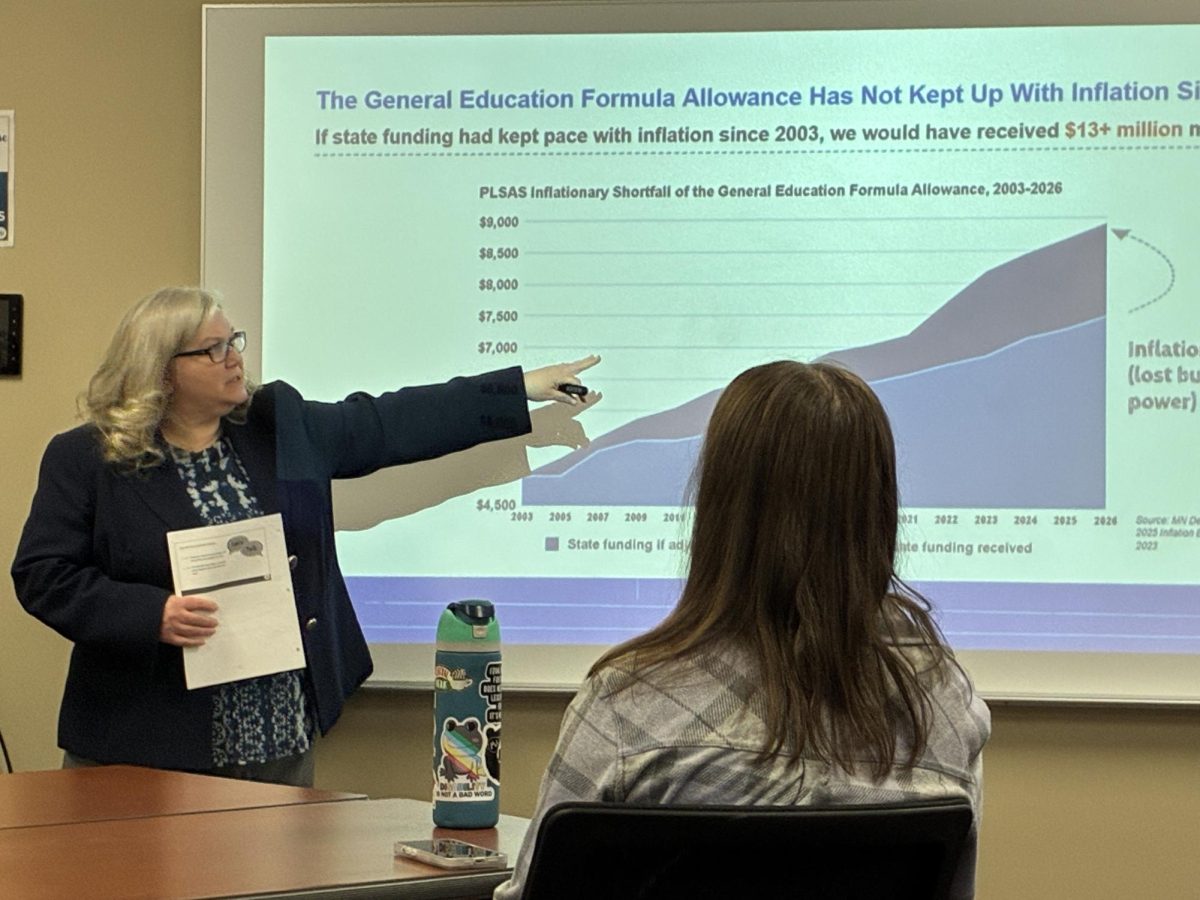
Close to 40 residents of the Prior Lake-Savage Area School District attended the second “town hall” meeting on Feb. 10 at the District Services Center, which focused on current financial trends along with options being considered to address future anticipated shortfalls.
Dr. Michael Thomas, PLSAS Superintendent, along with Lisa Rider, Executive Director of Business Services, led the presentation that encouraged questions from audience members throughout the meeting.
Thomas said the three sessions organized by the district were intended to show residents a real-time picture of finances, how resources were being managed, and to gather input from community members on how challenges can be overcome. As was discussed at recent school board meetings, the future plan will most likely include asking local voters in the fall to support a referendum to raise additional funds.
District officials have been forced to trim expenses by close to $4 million in each of the last two years which included cutting programs, eliminating staff positions, closing WestWood Elementary as a neighborhood school and selling the District Services Center building.
Rider provided information on what other metro districts are spending on a per-pupil basis, most of which have passed referendums in recent years. Many now have levies in place to increase per-pupil spending by $2,500 to $3,000 above state funding levels. Prior Lake-Savage currently ranks fifth from the bottom of approximately 50 districts studied, with $624 per student in additional spending approved through a referendum that will expire next year.
“State funding has not kept pace with inflation since 2003,” Thomas said. “If we had, we would have received $13-plus million more this year. Revenue growth has slowed, but our costs continue to rise.”
Prompted by questions from those in attendance, Thomas and Rider provided answers about what areas have produced the greatest increase in cost to the district. Thomas identified three as having the most significant impact on the district budget.
“Transportation costs have gone through the roof,” he said, adding that mandates related to special education offerings require the district to heavily subsidize costs related to the programs.
Rider added that additional funding for special education is oftentimes not released to districts until the following year after expenses are incurred, which adds to current cash shortfalls while complicating current and future budget projections.
Thomas said the third major impact to district finances in recent years has come from declining student counts resulting from smaller family sizes, and from the number of students participating in Post-Secondary Enrollment Options (PSEO) programs. The trend is with students taking classes for college credit or for learning work skills at local community or technical colleges to get a jump-start on a future career. While it’s a great option for students, he said, this, too, reduces the amount of funding received by local districts.
“The state funding program is antiquated,” Thomas said. “The funding system we have now was designed 50 years ago. Eighty percent of budgets in public education relate to people. Policy changes that are handed down to us come with no additional funding.”
Thomas said the town hall meetings were intended to be listening sessions that would provide guidance for district leaders to move forward in defining financial priorities and planning for the future. Additional community input will be sought in the coming months, and residents will be asked to participate in community surveys.
The final town hall meeting is scheduled for Wednesday, Feb. 25, from 6 to 7:30 p.m. at the District Services Center, 4540 Tower Street, Prior Lake. The meeting is open to the public.