Clean Water Funds from the Minnesota Board of Water and Soil Resources (BWSR) supported conservation work that significantly contributed to four lakes, two river reaches and one creek’s proposed removal from the state’s impaired waters list.
The lakes are in or near the seven-county Twin Cities metro and include Upper Prior Lake. All have been monitored for years and data exists to show improvement. A designated trout stream in Hubbard County, part of the Sand Hill River in Polk County that now supports redhorse species and a segment of a Sauk River tributary in Stearns County round out that list.
“The delistings are encouraging, because they show that our investments and planning and projects and programs are definitely working,” Maggie Karschnia, BWSR clean water coordinator, said of state and local governments. “The proposed delistings represent the payoff from sustained effort and collaboration over an extended period of time.”
U.S. Environmental Protection Agency (EPA) approval finalizes the status.
The Minnesota Pollution Control Agency (MPCA) is accepting comments through July 22 on its proposed 45 removals (22 of them resulting from known restoration work) and 46 additions to the 2026 draft impaired waters list. MPCA staff will then respond to all comments within 30 days. The EPA has another 30 days to respond.
“It is really exciting that we’re seeing more delistings,” said Leya Charles, MPCA water assessment and impaired waters list coordinator. “We’re expecting that trend to continue, being that there’s a lot of really good work and really good funding in Minnesota, a lot of really engaged watershed management organizations that are doing this work. It really does take that grassroots level.”

Landowners’ involvement is key to improving water quality, according to board officials.
“Clean Water Funds have been an important part of the equation because they help these communities, from planning to action,” Karschnia said. “Those dollars are leveraged with other local, state, federal and private funding, which then allows them to move forward with larger, more expensive projects that otherwise likely would not have happened. … BWSR’s funding often is that tipping point to getting these waters where they need to be.”
Delistings are proposed when data show a solid trend in water-quality improvement and meet the state water quality standard.
The MPCA monitors about 26,000 water bodies — including 11,564 lakes, plus wetlands and stream reaches — in a 10-year cycle. Since the first impaired waters list was released in 1994, about 2,250 water bodies have been added; about 125 have been removed.
“Forty-five delistings? Amazing. But there’s also so much other work that is happening behind the scenes in those trends and those improvements that just might not have quite triggered that it’s good enough for a delisting,” Charles said.
The following summarizes BWSR Clean Water Fund-backed proposed delisting of Upper Prior Lake.
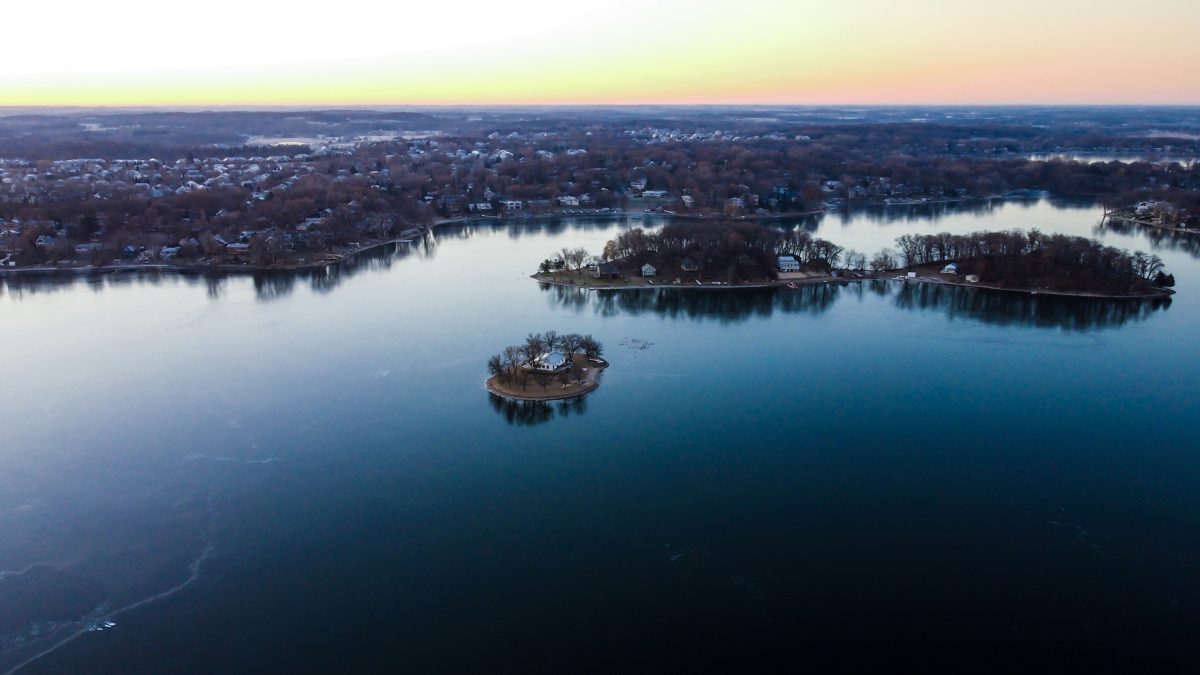
The city of Prior Lake touts its namesake — counting Upper and Lower Prior lakes as a single water body — as one of the 10 most popular recreational lakes in the state. Ringed by houses and a finger of Spring Lake Regional Park, Upper Prior Lake, the smaller of the two at 386 acres, averages 10 feet deep and contains walleye, largemouth bass, Northern pike, panfish and common carp.
The previously abundant carp population, which contributed to turbidity of the lake — listed in 2002 as impaired for aquatic recreation because of excessive nutrients — by stirring up the lake bottom and uprooting aquatic plants, took a hit after a $400,000 removal, barrier and tracking project between 2019 and 2021.
A $185,000 Metro Area WBIF grant from BWSR in 2019 supported the work, which leveraged Prior Lake-Spring Lake Watershed District (PLSLWD), EPA and Minnesota Department of Natural Resources (DNR) funds, and removed nearly 27 tons of carp from Upper Prior and Spring lakes. Water flows from Spring Lake to Upper Prior to Lower Prior lakes. Annual phosphorus reduction estimates for both lakes totaled 908 pounds.
“As a very small local entity, we cannot accomplish all of these projects without the funding. So we’re very grateful for that support statewide and it’s evident in how much we’ve been able to accomplish,” said Emily Dick, PLSLWD water resources manager.

Since 2011, with partners including the Scott Soil & Water Conservation District (SWCD), the city of Prior Lake plus state and federal agencies and the Shakopee Mdewakanton Sioux Community, the watershed has implemented nearly $9.4 million in conservation work contributing to water quality improvements in Upper Prior Lake.
Among the BWSR Clean Water Fund-supported projects: a $404,270 wetland restoration and iron-enhanced sand filter installed in 2014 to reduce stormwater runoff and nutrient loading.
A $449,500 Clean Water Fund grant BWSR awarded to the PLSLWD in 2020 supported an alum treatment targeting in-lake phosphorus, which the MPCA had identified as the source of 50% of phosphorus affecting Upper Prior Lake. That treatment, along with a second, district-funded alum treatment this spring, were projected to reduce phosphorus by 571 pounds a year.
“That was the tipping point for the lake,” said Jeff Anderson, PLSLWD water resources coordinator.
Since 2020, the lake has consistently met MPCA shallow-lake water quality standards for phosphorus, Chlorophyll‑a (a measure of algae and cyanobacteria) and water clarity, with the exception of elevated Chlorophyll‑a in 2024 and 2025.
“The [proposed] delisting comes after decades of work. The lake was listed in 2002, and I’m just really proud that we’ve gotten to this point. It’s great to look back at the list of things that we’ve accomplished to get us here, and how varied they are,” said Dick, who joined the watershed about four years ago.
While larger projects required watershed management, landowners took the lead on shoreline restorations, rain gardens and cover crops. The city of Prior Lake got involved in street-sweeping efforts.
“Big projects, small projects — all of it is really culminating here,” Dick said. “We’ve been seeing the fruits of those efforts in our water-quality on the lake.”
“I’m excited to see the changes the lake has had for the better over the last many years. Being an active participant within the programs and projects, seeing them implemented, being a part of the hard work that was done to help manage carp and get it to a level that is shown to be less damaging to lakes is awesome,” Jeff Anderson, PLSLWD water resources coordinator concluded.
(Submitted by Ann Wessel, BWSR conservation marketing coordinator)
The Minnesota Board of Water and Soil Resources’ mission is to work with partners to improve and protect Minnesota’s land and water resources. bwsr.state.mn.us
33% of sales tax revenue from the Legacy Amendment, which Minnesota voters passed in 2008, is allocated to the Clean Water Fund. Clean Water Funds may only be spent to protect, enhance or restore water quality in lakes, rivers and streams, and to protect groundwater.
MPCA Details
IMPAIRED WATERS DEFINITION: The MPCA defines an impaired water as a water body that fails to meet water-quality standards (which protect waters by defining how much of a pollutant can be present before the water is no longer considered drinkable, swimmable, fishable or usable in other defined ways) in one or more of seven areas: nutrients that grow algae, sediment that clouds water, bacteria that can make swimming unsafe, limited fish and insect diversity, mercury levels that limit safe fish consumption, PFAS in fish tissue and sulfate that may affect wild rice production.
IMPAIRED WATERS LIST: Updated every other year, as required by the federal Clean Water Act
MEETING WATER-QUALITY STANDARDS: Removal from the impaired waters list requires meeting the standard for phosphorus levels, and either Secchi disk readings, which measure clarity, or Chlorophyll-a levels, a measure of algae and cyanobacteria.
MINNESOTA WATERS: Minnesota waters include more than 26,000 water body IDs. That includes 11,564 lakes, plus wetlands, stream segments and river reaches. The Mississippi River, for example, is broken into 19 river reaches.
LINK: MPCA Impaired Waters List (includes a tab for proposed delistings and for additions)