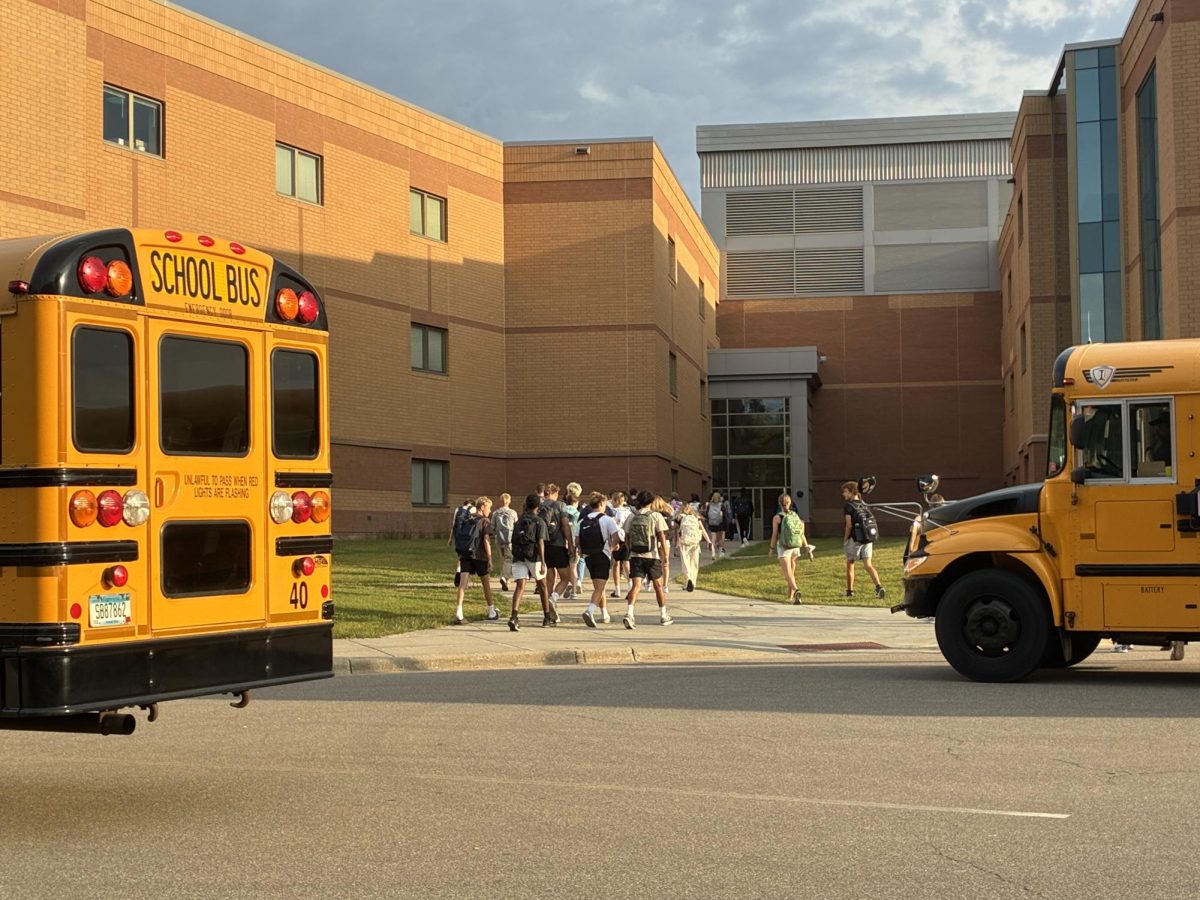

Prior Lake-Savage Area Schools kindergarten and third-grade reading readiness fell in the past year, missing both goals by nearly 10-percentage points of their respective assessments.
During the Nov. 24 school board meeting on this year’s Comprehensive Achievement and Readiness Report, district administrators said the difficulties to reach academic goals are closely tied to the district’s lack of resources.
The Minnesota Department of Education requires districts to submit annual CACR reports that provide details, strategies and progress in reaching their academic goals, including reading readiness. The percentage of kindergarteners who scored in the low-risk category, meaning they’re likely to meet grade-level goals without intensive support, and third-graders who scored within the “meets or exceeds” category on state standardized reading assessments both dropped.
The district set a kindergarten reading readiness goal of 74% falling in the low-risk category for fall 2025, an increase from 71% in fall 2024. The actual reading readiness score was 65% in the low-risk category.
The district’s third-grade reading assessment scores also failed to meet its state standardized reading assessment from 65% of third graders scoring in the “meets or exceeds” category in 2024 to 67% in 2025. The actual percentage who reached that goal was 55%.
Five Hawks Elementary School principal Katy Schuerman said the district has very few interventionists, so it is up to the teachers to work with high-risk students as well as the rest of the class.

“As our class sizes grow and the resources diminish, it comes all down to that classroom teacher,” she said. “So, the load that our teachers carry is increasingly heavy.”
Director of assessment and improvement Dr. Jennie Zumbusch said they found the current reading program – Foundations – has some gaps in comprehension and vocabulary. The district is implementing a new literacy package to comply with new state standards set in the READ Act, which should help to fill those gaps, she said.
In its college and career readiness equity goal, the district sought a 1-point increase in its average ACT score of the two lowest sub-groups. That would mean an increase in ACT scores from 19.0 to 20.0 for Hispanic and Latino students and an increase from 16.7 to 17.7 for Black students. Scores climbed slightly to 19.1 for Hispanic and Latino students and 17.0 for Black students.
Zumbusch said just because a goal isn’t met does not mean student readiness is declining. She said the two lowest sub-groups increased their average scores even if they didn’t meet the district’s goal.
Prior Lake High School assistant principal Chad Thorp said the district has a high college readiness rate. More than one-third of high school students are advanced placement students. Eighty percent of students who took AP exams last spring scored a 3 or above, indicating they were college-ready.
Thorp said the district would like to see ACT scores increase more. One option the district is looking at is teachers’ professional development to help keep up with the ever-changing state standards.

PLSAS superintendent Dr. Michael Thomas said statewide assessments give an incomplete analysis of student performance.
“We are seeing this across the entire state, dare I say across the country, which is bringing up the bigger conversations of assessments and the readiness skills that we’re looking for,” Thomas said.
Dr. Tim Anderson, executive director of academic services, said the Education Department expects more from school staff while requiring the staff to do more with fewer resources.
“We know that assessments are measuring in new ways, and we’re seeing a shift of standards asking for more rigor,” he said. “And the folks at the site level in our system are being asked to do more than their colleagues in other systems and that’s in part due to our resource situation.”

Budget revisions
Lisa Rider, executive director of business services, presented a revised 2025-26 budget proposal during the study session. The original fiscal year 2026 budget adopted June 9 proposed using general fund money in excess of revenue by $982,000. The revised budget proposal has the excess at $768,000.
The board received the results of its fiscal year 2025 audit Nov. 10, with the auditor recommending the district revise the budget to weather increased expenses amid shrinking revenue.
“If you look at the areas that we were over budget, it’s not as a result of spending that was inappropriate,” Rider said at the Nov. 24 meeting. “It was because of costs in areas that we can’t do much about, such as transportation costs.”
Thomas said cutting more from the budget to cover overages in transportation costs would endanger student performance.
“When we are making additional cuts to offset fixed industry costs that we don’t necessarily control, we’re going to be cutting from the very fabric of support that we need to reach the outcomes that we discussed earlier,” Thomas said.
The board will vote on the revised budget proposal in January.
Smith sworn in
Newly-elected board member Dustin Smith was sworn in during the board study session. Amy Bullyan was elected temporary chair and Jessica Olstad was elected temporary vice-chair. The permanent chair and vice chair will be selected in January.